


Just One Yoga Class a Week Was Enough to Measurably Improve Beginners’ Flexibility
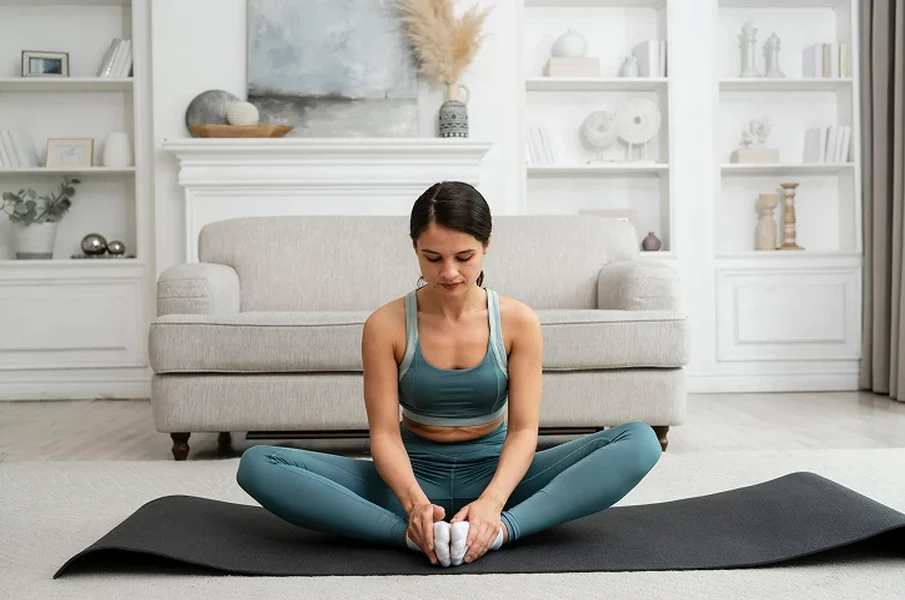
A group of healthy young women attended one hatha yoga class a week for ten weeks. Nothing more. By the end, their flexibility had measurably improved on standard physical tests, while a comparison group that did nothing actually got slightly less flexible over the same stretch. The researchers’ own conclusion was blunt: even a once-a-week habit is enough to move the needle.
What the Study Actually Measured
The improvements weren’t vague impressions. Participants did better on a sit-and-reach test and a side-bend test, both standard ways of measuring flexibility in a research setting. Balance improved too, though only on one specific test, standing on one leg with eyes open, and not on a version done with eyes closed. Core strength, measured by how long someone could hold a plank, also went up over the ten weeks.
Nothing changed on measures like body fat percentage or resting heart rate, which is a useful reminder that a beginner yoga habit is doing something real, just not everything at once. A separate six-week study of middle-aged women found similar flexibility gains from a weekly class, which suggests the pattern isn’t limited to one age group or one particular style.
Why This Matters More for Someone Starting Out Than It Sounds
A lot of people put off trying yoga for beginners classes because they assume the benefit only shows up with a demanding, near-daily routine, or that they need to already be somewhat flexible before it’s worth starting. Neither assumption matches what the research actually found. One class a week, sustained for a couple of months, was enough to produce changes that showed up on an objective test, not just a feeling.
Habits That Can Quietly Undercut a Good Beginner Routine
- Holding the breath through a difficult pose, which tends to happen when the focus shifts to how a pose looks rather than how it feels.
- Skipping props out of embarrassment. A block or strap isn’t a sign of struggling; it’s what lets a pose work for the body in front of it, rather than the one in a photo.
- Starting with an intense style like power or hot yoga, which can be discouraging before the basics have had a chance to settle in.
- Comparing a first week of practice to someone else’s tenth year, which measures the wrong thing entirely.
What a Realistic First Few Weeks Actually Look Like
Expecting a dramatic before-and-after within the first week or two sets most beginners up to feel like it isn’t working. The research points the other way: steady, modest, weekly practice is what produced the measurable change, not intensity or frequency pushed to the limit. Two to three sessions a week is a reasonable place to settle once the first few classes feel comfortable, rather than a starting requirement.
Anyone managing an injury, a chronic condition, or pregnancy should check with a doctor before starting a new practice, since what’s appropriate varies from person to person in ways a general guide like this one can’t account for.
It also helps to pick a style suited to a first class rather than whatever happens to be trending. Hatha tends to move at a slower, steadier pace than power or hot yoga, which gives a beginner room to learn the shapes of each pose properly before worrying about how quickly the sequence moves. That slower pace is also where most of the noticing happens: the small adjustment in a stretch, the moment balance settles, that’s easy to miss when a class is rushed.
Showing up once a week, consistently, is already doing more than it might feel like in the moment. Contact The Yoga House to find a beginner-friendly class that fits your week.


